



Can You Have Health Problems After a Root Canal?
Your tooth may be treated, but are you?
Root canals are often presented as a routine, save-your-tooth procedure. But in biological dentistry, we have to ask a deeper question: what happens to the rest of the body when we keep a dead, infected, or heavily treated tooth in place?
From a whole-body perspective, the answer is not always simple — or reassuring.
Here, I’ll walk you through how root canals work, why some patients develop health problems afterward, and what a more biologically minded path forward can look like.
What Actually Happens During a Root Canal?
In a traditional root canal, the dentist removes the nerve and blood supply — called the pulp — from inside the tooth. The canals are then cleaned, shaped, and disinfected. The empty space is filled and sealed, usually with a material called gutta-percha and sealer. Most of the time, the tooth is then restored with a crown.
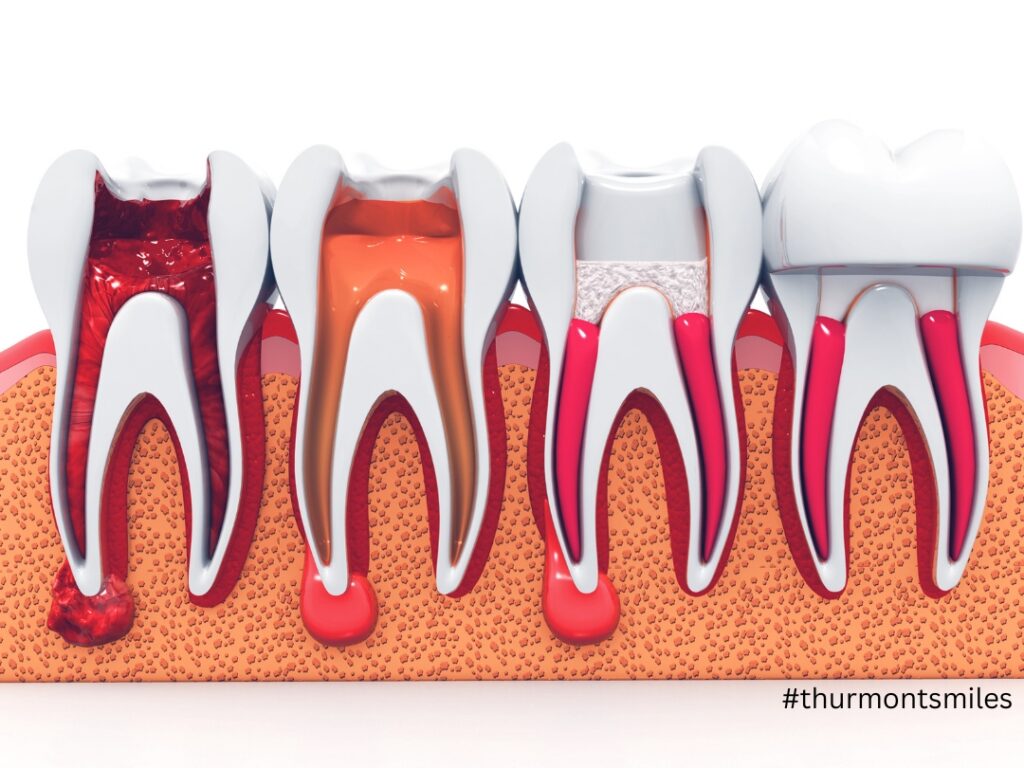
On paper, the tooth is “fixed.” The pain is gone because the nerve is gone.
But biologically, something very different has just happened inside your body. We’ve created a non-living structure still anchored in living bone — and still connected to your immune system.
Why Biological Dentists Look Deeper
In a healthy tooth, the pulp and blood supply keep the tooth alive and responsive. After a root canal:
The tooth is no longer alive. It loses its natural immune and sensory function. Dentin — the layer beneath the enamel — still contains millions of tiny channels called microtubules. These spaces can never be fully sterilized. Bacteria and their toxic byproducts can remain or recolonize inside these micro-spaces, even when the main canal looks perfectly clean on an X-ray.
Traditional dentistry tends to judge success by the absence of pain and X-rays that “look fine.”
Biological dentistry asks a different set of questions:
Is there chronic, low-grade infection in the jawbone around the tooth? Are bacterial toxins entering the bloodstream? Are there systemic or unexplained symptoms that started — or got worse — after the root canal?
Health Problems That May Be Linked to Root Canals
Not every patient with a root canal will get sick. But for some — especially those already navigating chronic illness or immune challenges — a root canal-treated tooth can be one piece of a much larger puzzle.
1. Vague Symptoms With No Clear Diagnosis
Some patients see multiple physicians with a long list of symptoms that don’t fit neatly into any known disease. Fatigue and low energy. Brain fog or poor concentration. Migrating joint or muscle pain. Recurrent sinus or throat irritation. Sleep disturbance, anxiety, or mood changes.
Their labs may come back “normal,” and yet they feel far from well.
In a number of these cases, the history includes old root canals, previous wisdom tooth removal, root tips left in the jaw, or a mouth full of metal restorations. In biological dentistry, we take this seriously. We at least ask: could chronic dental infections or root canal-treated teeth be acting as a silent stressor on the immune system?
2. Persistent Pain That Doesn’t Resolve
Some patients come to me because their tooth pain never improved — not after a root canal, not after retreatment, and not even after the tooth was extracted.
I’ve seen cases where two teeth were treated and then removed, yet the pain remained completely unchanged months later. And when we looked at the full picture, that same patient also had snoring and grinding, clicking jaw joints, morning headaches, neck and shoulder pain, fatigue, acid reflux, depression, and what they described as “chest tension.”
Here’s the truth: a root canal can be performed perfectly, and still fail — because the real source of the problem was never inside the tooth at all. Airway issues, sleep-disordered breathing, and TMJ dysfunction can drive pain and systemic symptoms that look exactly like a dental problem.
If we only look at the tooth, we miss the whole person.
3. The Mouth-Body Meridian Connection
Biological dentistry also draws from the traditional concept of tooth-organ meridians — the understanding that each tooth is connected to specific organs or body systems through energetic pathways.
For example, certain teeth are associated with the adrenal glands. Chronic sensitivity or recurring issues in those teeth may reflect or mirror adrenal stress. Second bicuspids, in some meridian models, are linked to breast and lung tissue. Chronic problems in that area — including root canal-treated teeth — may sometimes correlate with dysfunction in those systems.
This does not mean a root canal causes breast or lung disease. But when we see persistent dysfunction along a meridian, we pay attention. And when a patient has phantom pain in an area where the tooth has already been removed, that signal may be pointing to the connected organ or system — not the tooth itself.
Why Standard Dental Evaluations Often Miss the Root Cause
Many irreversible dental decisions — root canals, full-mouth reconstructions, extractions — are made based on panoramic X-rays, study models, and basic clinical exams. These tools matter. But they’re limited.
When we don’t evaluate airway and breathing, jaw position and TMJ health, posture and muscle balance, and systemic inflammation — we end up treating the tooth while the real cause of the symptoms goes untouched.
That’s how patients end up in a cycle of failed dentistry: the tooth is treated, retreated, extracted, and still they’re no better. Sometimes worse.
Can a Root Canal Trigger or Worsen Systemic Disease?
From a biological standpoint, there are several ways a root canal-treated tooth can contribute to broader health challenges.
Residual bacteria in the dentinal tubules or surrounding bone can place a continuous burden on your immune system. Bacterial toxins may enter the bloodstream and affect distant organs. For someone who is already immunologically stressed, even a small, chronic local infection can be significant. Some practitioners also view root canal teeth and old extraction sites as interference fields — disruptions to normal signaling that can affect healing in other areas of the body.
Is every root canal harmful? No. But in patients with mystery illnesses, autoimmune conditions, or multiple chronic health challenges, root canals deserve to be evaluated — not dismissed.
How I Approach a Root Canal-Treated Tooth
My philosophy is straightforward: I don’t want to create panic, and I don’t want to oversimplify. But I also won’t ignore what the teeth can tell us about the rest of the body.
When patients ask whether their root canal could be affecting their health, I walk them through three pathways:
Pathway 1: Comprehensive Biological Evaluation Using advanced imaging and a full health history, we assess whether specific teeth may be contributing to what’s happening systemically.
Pathway 2: Guided Removal With Biological Protocols For clearly problematic root canal teeth, we discuss extraction using biological protocols and biocompatible tooth replacement options.
Pathway 3: Prevention — Avoiding Root Canal in the First Place Through early diagnosis, remineralization, minimally invasive care, ozone therapy, and a full systemic picture, we work to keep teeth alive and healthy. This is always my first priority.
Which pathway makes sense depends entirely on you — your health status, your history, your goals, and what we find clinically.
What You Can Do If You’re Concerned
If you suspect a root canal may be connected to health symptoms you’re experiencing, here’s where to start:
Track your timeline. When was the root canal done? When did your symptoms begin or worsen? Patterns matter.
Ask deeper questions at your next dental visit. Not just “Is it filled?” but “Is there hidden infection? Is this tooth on a key meridian? What else might be going on systemically?”
Think about your airway and sleep. Snoring, clenching, jaw tension, and fatigue can point to breathing issues that look and feel like dental problems.
Build a team. A biological dentist working alongside a functional or integrative physician can help connect the dots between what’s happening in your mouth and what’s happening in your body.
The Bottom Line
Yes — health problems can follow a root canal. But not everyone will experience them, and the tooth is rarely the only variable.
From a biological perspective, a root canal-treated tooth is no longer living. It cannot be fully sterilized. And it remains deeply connected to your immune system and energetic pathways.
For a healthy, resilient patient, this may never become a problem. For someone navigating chronic or unexplained illness, it may be a missing piece of a puzzle they’ve been trying to solve for years.
If you’re asking whether your root canal could be affecting your health, the answer is: it’s worth finding out. Not from a place of fear — but from a place of clarity, intention, and a plan that’s built around you.
Dr. Mansi Oza is a biological and biomimetic dentist and the owner of Thurmont Smiles in Thurmont, Maryland. She has been in practice for over 25 years and focuses on dentistry for longevity — reducing inflammation, preserving natural tooth structure, and helping patients take ownership of their whole-body health.
