



Gum Disease, Diabetes, and the Connection Your Doctor Never Mentioned
Why Your Blood Sugar May Not Improve Until You Look Inside Your Mouth
If you’re working hard to lower your blood sugar but your numbers still aren’t where you want them to be, there’s one place you may not have considered looking. Your mouth.
As both a biological dentist and someone managing diabetes myself, I’ve become increasingly convinced that oral health deserves a seat at the table when we’re talking about metabolic health.
Many of my patients are surprised when I explain that bleeding gums, hidden infections, and chronic inflammation in the mouth may be contributing to inflammation throughout the body. Yet very few people are ever told to have their gums and hidden, painless infections in the mouth evaluated as part of managing diabetes or prediabetes.
The Mouth and Blood Sugar Are Constantly Talking to Each Other
Think of it as a two-way relationship.
When blood sugar stays elevated, the immune system doesn’t function as well, healing slows down, and harmful bacteria in the mouth have an easier time thriving.
At the same time, active gum disease creates chronic inflammation. The bacteria living beneath the gums and the body’s immune response to them can increase the inflammatory burden your body has to manage every day.
It becomes a vicious cycle:
- Higher blood sugar supports more bacterial growth.
- More bacteria lead to more inflammation.
- More inflammation can make it harder for the body to regulate blood sugar effectively.
Breaking this cycle often requires treating both the metabolic condition and the oral infection.
Gum Disease Is More Than a Dental Problem
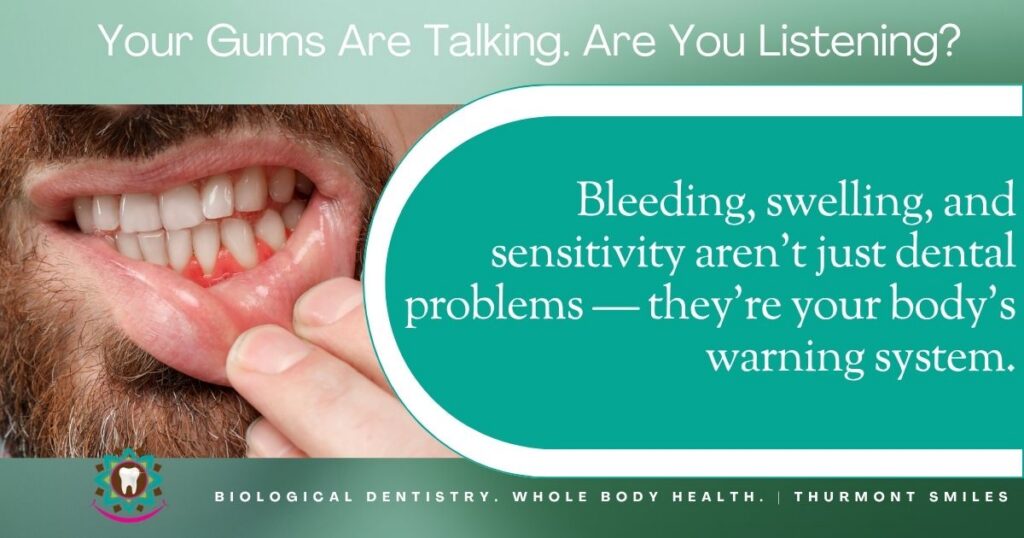
Many people think bleeding gums are normal.
They aren’t.
Gum disease usually begins as gingivitis—red, swollen, bleeding gums. Left untreated, it can progress to periodontitis, where the supporting bone around the teeth begins to break down.
The challenging part is that periodontal disease is usually painless until it’s fairly advanced.
Meanwhile, harmful bacteria may already be entering the bloodstream through inflamed gum tissues.
Research has found associations between periodontal disease and conditions including diabetes, cardiovascular disease, and cognitive decline. Scientists have also identified certain oral bacteria in arterial plaque and brain tissue, which has expanded our understanding of how closely the mouth and body are connected.
What Makes Our Approach Different
Traditional periodontal treatment focuses primarily on removing plaque and tartar below the gumline. That mechanical cleaning is essential—but in my practice, it’s only part of the picture.
I want to understand why the disease is there and exactly what we’re treating.
That’s why our biological periodontal evaluations may include:
- Comprehensive gum measurements
- Saliva and microbial testing to identify harmful bacteria
- Digital imaging when appropriate
- Ozone therapy
- Laser-assisted periodontal treatment
- Personalized home-care recommendations
Rather than using the same treatment plan for every patient, we tailor therapy based on each person’s oral microbiome and overall health.
A Patient Story
Recently, we evaluated a physician who underwent saliva testing as part of his periodontal assessment.
His testing revealed high levels of several aggressive periodontal pathogens, including Porphyromonas gingivalis and Tannerella forsythia.
Those results allowed us to customize his periodontal therapy rather than relying on a one-size-fits-all approach.
This is one reason I believe saliva testing is becoming an increasingly valuable tool in biological dentistry.
What I Wish More Physicians Asked
I’ve had my diagnosis of diabetes-prediabetes for past 3 years. Not a single medical doctor or health coach has asked me about my dental health- and no, most did not ask about my profession either, so they did not know about me being a dentist until I told them and the mouth connection was still not asked or discussed. They are very good at what they do but most miss how the health of our mouth can affect the blood sugar.
Like many people managing diabetes, I had very detailed lab work reviewed, including inflammatory markers. But no one asked about my gums.
That experience reminded me how often oral health is left out of conversations about longevity and metabolic health.
Ironically, I frequently receive requests from surgeons asking patients to obtain dental clearance before heart surgery or joint replacement because they recognize that oral infections matter before major procedures.
My question is: why wait until surgery?
If oral inflammation is important before a major operation, shouldn’t it also matter while we’re trying to prevent chronic disease in the first place?
What I Recommend for Patients With Diabetes or Prediabetes
If you have diabetes, prediabetes, and/or insulin resistance, I recommend thinking about your mouth as part of your overall health plan.
Here’s what I typically discuss with my patients:
Stay Consistent With Periodontal Maintenance
Patients with active gum disease often benefit from professional periodontal maintenance every three months to help keep inflammation under control.
Make Home Care Non-Negotiable
Daily brushing is important, but it isn’t enough.
Cleaning between the teeth with floss or other interdental aids, using a water flosser when appropriate, and cleaning your tongue all help reduce bacterial buildup.
Choose Products That Support Healing
Depending on your individual needs, we may recommend ozonated rinses or other biologically supportive products during active periodontal treatment while avoiding unnecessarily harsh chemicals.
Know Your Health Markers
I encourage patients to work with their physician to monitor important health markers, including:
- Hemoglobin A1C
- C-reactive protein (CRP)
- Vitamin D
- Iron levels
These values can provide important insight into inflammation, healing, and metabolic health.
Don’t Ignore Bleeding Gums
Healthy gums generally do not bleed.
Bleeding is often an early sign that your body is responding to bacterial buildup, and it deserves attention before more serious damage occurs. Click to learn more about Biological Bacterial Reduction Gum Therapy
My Final Thoughts
As a biological dentist, I don’t see teeth in isolation. I see the whole person attached to them.
If you’re doing everything you can to improve your blood sugar but still struggling, don’t overlook your oral health. Besides gum infection, there are many ways infection hides under the painless but infected teeth. Click to learn more about Mercury Fillings Removal
You may not be able to manage diabetes through dental treatment alone, but treating chronic oral inflammation may remove one of the obstacles standing in your way.
Sometimes the missing piece isn’t another medication.
Sometimes it’s hidden in your smile.
Click to learn more about our detailed initial exam
Dr. Mansi Oza, BDS, DMD, FICOI