



Can I Live a Healthy Life With Periodontitis?
The short answer is yes. But only if you take it seriously.
For years, periodontitis was viewed much like other chronic conditions — something that cannot be completely cured but can be managed. What has changed dramatically is our understanding of how periodontal disease affects the rest of your body.
Periodontitis is not just a problem in your mouth. It is a chronic inflammatory condition that influences your overall health in ways most patients are never told about. As a biological dentist, my concern is not only whether you keep your teeth. My concern is whether chronic inflammation and harmful oral bacteria are quietly affecting the rest of your body every single day.
The Real Question Is Not About Your Gums
When patients ask me whether they can live a healthy life with periodontitis, I often tell them they are asking the wrong question.
The better question is this: Can I live a healthy life with chronic inflammation and harmful bacteria constantly entering my bloodstream?
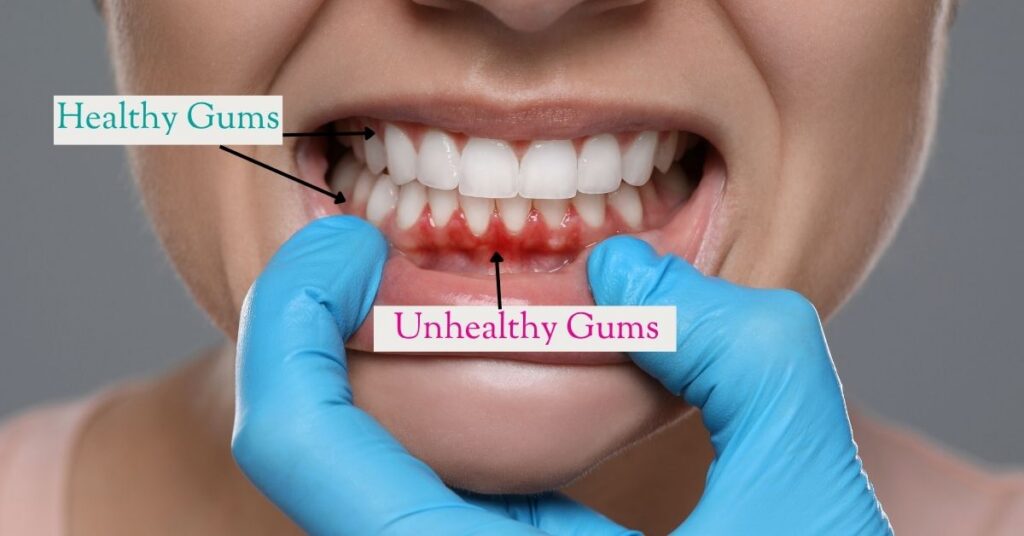
Periodontitis develops silently. It is usually painless until it becomes advanced. Most patients do not notice bleeding gums, loose teeth, or bone loss until significant damage has already occurred. Meanwhile, the body is responding to that inflammation every single day — whether you feel it or not.
Why Periodontitis Matters Beyond Your Teeth
Your gums form a protective seal around your teeth. When that seal becomes inflamed and breaks down, oral bacteria gain access to your bloodstream.
Research continues to strengthen the connection between periodontal disease and conditions such as:
- Diabetes and blood sugar dysregulation
- Heart disease and stroke
- Elevated inflammatory markers
- Cognitive decline
- Other chronic inflammatory conditions
Years ago, many healthcare professionals believed gum disease was simply associated with these conditions. Today, growing evidence suggests that specific oral bacteria may play a direct role in disease processes throughout the body. That is why I believe oral health belongs in every wellness and longevity conversation — not as an afterthought, but as a foundation.
What Frustrates Me as a Biological Dentist
One thing that genuinely concerns me is how often physicians and health experts focus on every biomarker imaginable but never ask about the patient’s mouth.
Many longevity-focused practitioners routinely monitor inflammatory markers, cardiovascular risk factors, and blood sugar levels. Yet few ask whether the patient has active periodontal disease.
I do receive dental clearance requests from patients preparing for heart surgery or joint replacement. Suddenly their oral health becomes important because another doctor recognizes the infection risk. But oral health should not become important only before a major procedure. It should be part of maintaining health every single day.
You can work incredibly hard — improving your diet, exercising regularly, lowering your blood sugar — and still be fighting an ongoing source of chronic immune stress coming from your own mouth.
What Makes Biological Periodontal Therapy Different
Traditional periodontal treatment focuses primarily on the mechanical side — deep cleaning, scaling, oral hygiene instruction, prescription rinses. These are important and necessary. But I always ask one additional question: what are we actually treating?
If harmful bacteria are driving the disease process, I want to identify them.
Our biological approach at Thurmont Smiles includes:
- Detailed periodontal measurements
- Salivary diagnostic testing
- Microbial testing to identify specific harmful bacteria
- Ozone therapy to eliminate pathogens without harming surrounding tissue
- Laser-assisted periodontal therapy performed by our certified laser hygienist
- Customized home care protocols
- Ongoing monitoring and maintenance
The goal is not simply cleaning your teeth. The goal is creating an environment where harmful bacteria are less likely to thrive and return. And we aim to accomplish this without surgery, before surgery ever becomes necessary.
Why Saliva Testing Changed How I See Periodontal Care
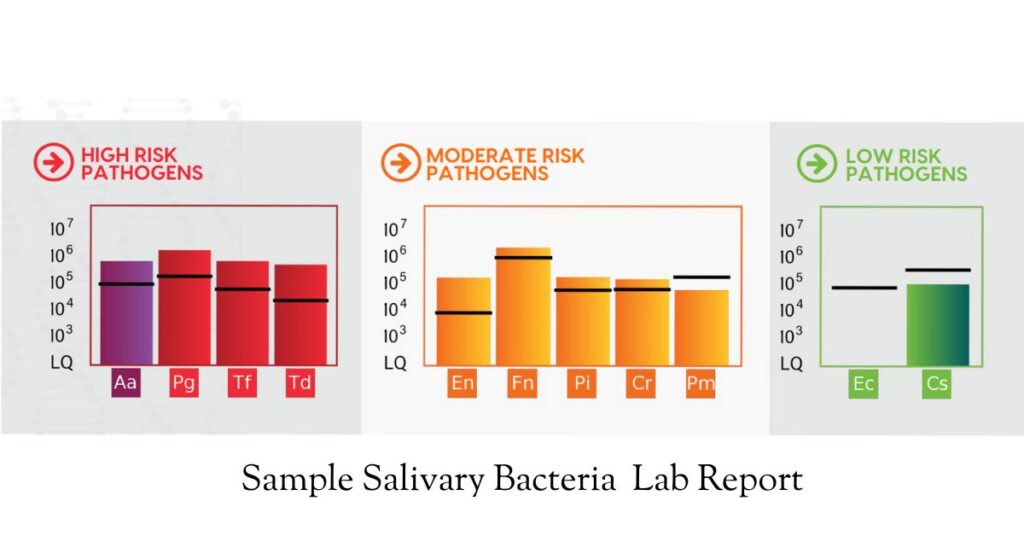
Sample report courtesy of OralDNA Labs
One of our patients — a chiropractor — came in for a periodontal evaluation. He was health conscious, knowledgeable, and wanted to know everything that was happening in his own mouth.
His saliva test results showed elevated levels of several high-risk periodontal pathogens, including Porphyromonas gingivalis and Tannerella forsythia. Without testing, we would have known he had periodontal disease. With testing, we understood exactly which bacteria were present and could tailor his treatment accordingly.
That case reinforced something I believe deeply: knowing what you are treating changes how you treat it.
Can Periodontitis Be Stabilized
Absolutely. In my practice, we have helped many patients stabilize their periodontal disease and maintain healthy gum levels for years.
The patients who do best are the ones who:
- Follow through with their full treatment plan
- Maintain thorough daily home care
- Return for maintenance visits every three months
- Understand that periodontal disease requires ongoing attention, not a one-time fix
The patients who struggle are often the ones who feel better after treatment and assume the problem has gone away. Unfortunately, periodontitis does not work that way. Consistency is everything.
What I Tell My Patients
Keep your three-month visits
Most periodontal patients should be evaluated every three months. This schedule allows us to monitor pocket depths, inflammation, and bacterial activity before damage progresses.
Take home care seriously
Professional treatment alone is not enough. Daily care should include thorough brushing, flossing or interdental cleaning, water flosser use when appropriate, and tongue scraping. The most common mistake I see is patients gradually stopping their interdental cleaning because they feel fine.
Use gentle, supportive products
Harsh chemicals can irritate tissues and disrupt the oral environment. We recommend specific products based on each patient’s needs, including ozonated rinses during active periodontal treatment.
Know your numbers
I encourage patients to work closely with their physician and monitor key health markers including Vitamin D, C-reactive protein, HbA1c, and iron levels. These markers give us valuable information about inflammation, metabolic health, and your body’s healing potential.
Consider saliva testing
Knowing which bacteria are present helps us personalize your treatment and gives us important information about your systemic health risks.
Do not wait for pain
This is the most important thing I can tell you. Periodontitis is almost always painless until it is advanced. Bleeding gums, persistent bad breath, gum recession, and loose teeth are all warning signs that deserve prompt attention.
The Biggest Mistake I See
Patients sometimes sit across from me and say “just pull the tooth.” I hear it more than you might think.
What they often do not realize is that life becomes significantly more complicated once natural teeth are gone. No replacement — implant, bridge, or denture — fully replicates what your natural tooth does. The bone, the sensation, the function, the longevity. Nothing compares.
Saving natural teeth whenever possible is almost always the better long-term strategy. Not just for your smile. For your health.
The investment in periodontal care today is far less than the cost — financially, physically, and emotionally — of managing tooth loss, chronic inflammation, and the health conditions that can follow.
My Final Thoughts
Yes, you can absolutely live a healthy life with periodontitis. But not by ignoring it and not by hoping it stays the same.
The patients who thrive are the ones who understand that this is a chronic inflammatory condition that deserves ongoing attention. Your gums may be telling you far more about your overall health than you realize.
If you have not had a thorough periodontal evaluation in the past year, now is the time. We are here to assess where things stand, explain what we find in plain language, and work with you on a plan that fits your life — without judgment, without pressure, and with your long-term health as the goal.
Schedule your Initial Biological Wellness Exam at Thurmont Smiles today.